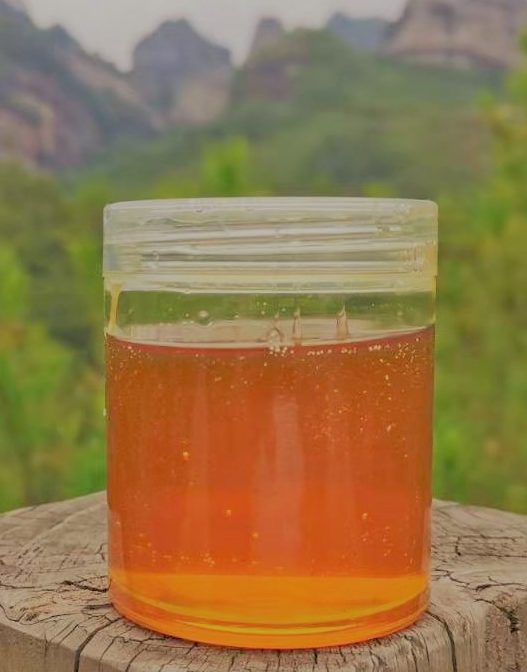
Liquid Terpene Resin
Liquid terpene Resin, is polymerized by gum turpentine, which is a kind of excellent tackifier, with the characteristics including strong cohesive force, good aging resistance, heat resistance, radiation-proof, acid resistance, alkali resistance, odorless, nontoxic and excellent dielectric properties. It is designed to improve the initial viscosity of pressure sensitive tapes, and provide excellent compatibility and solubility in a wide range of applications which widely used for Pressure Sensitive Tapes, rubber, adhesive, hot melting coating, lacquer, superior printing ink, packing, anti-rust oil and chewing gum, etc.
Substance Identification
| Synonyms | Terpene Polymer | Terpene Resin | Polyterpene Resin |
| CAS | 31393-98-3 |
| EINECS | N/A |
| FEMA | N/A |
| HS.CODE | N/A |
| Molecular Formula | (C10H16)n |
| Molecular Weight | 350~1250 |
Application & Uses
- used in all kinds of adhesives, such as pressure sensitive adhesives, hot melt adhesives
- used in printing Ink
- used as raw material of chewing gum
- used as food additives
- used as anti-moisture agents for gelatin microcapsules.
- used as hot melting coating
- used in anti-rust oil
Features & Benefits
- Light yellow or yellow viousity liquid with a little terpene aroma
- Excellent the initial viscosity of pressure sensitive tapes
- Excellent compatibility with SIS、SBS、EVA and natural rubber.Soluble in benzene, toluene, turpentine, gasoline, insoluble in water, methanol and ethanol.
- low temperature resistance.
- strong cohesive force, good aging resistance, heat resistance, radiation-proof, acid resistance, alkali resistance, nontoxic and excellent dielectric properties
Sales Specification
| ITEM | VALUE | TEST METHOD & UNIT |
|---|---|---|
| Appearance | Viscous yellow brown liquid, terpene odor | |
| Color | 7 max | @Gardner, 50% toluene |
| Acid Value | 1.0 max | mgKOH/g |
| Viscosity (Customizable) | 100 to 60000 | @35℃, mPa.s |
Q&A
When does it make sense to use a liquid polyterpene resin instead of a solid terpene resin as a tackifier in pressure‑sensitive adhesive tapes?
A liquid polyterpene resin is chosen when a formulator wants a tackifier that can be handled and metered as a liquid, avoiding the melting step required for solid terpene pellets and simplifying dosing into solvent‑borne or warm‑applied PSA systems. Its low molecular weight and correspondingly low glass transition temperature improve surface wetting and low‑temperature tack, which is useful for tapes and labels that must remain flexible and adhesive in refrigerated storage or outdoor conditions. Because it is already flowable at room temperature, it can also reduce processing energy and support more compact equipment layouts, since no separate pre‑melt kettle is needed. The trade‑off is that liquid grades generally contribute less cohesive strength and shear resistance than high‑softening‑point solid terpene resins, so they are often used as co‑tackifiers alongside solid resins rather than as the sole tackifier in high‑shear PSA tape constructions.
How should buyers use the wide 100–60000 mPa·s viscosity range at 35 °C when specifying a liquid terpene resin for adhesives and tapes?
The 100–60000 mPa·s range at 35 °C indicates that liquid terpene resins in this family can be produced across very different molecular‑weight windows, from light, easy‑flowing grades to very viscous, near semi‑solid grades. Lower‑viscosity grades are easier to pump, meter and dilute into solvent‑borne or low‑viscosity adhesive systems, while higher‑viscosity grades contribute more body and “built‑in” thickening for hot‑melt, protective tape or high‑coating‑weight applications where sag resistance matters. In practice, buyers should align on a target viscosity band with their formulation team—often a mid‑range grade for general PSA work or a defined higher band for hot‑melt and rubber adhesives—and ensure that this band, or a specific grade code linked to it, is explicitly written on the purchase order. Because the viscosity is customisable over such a wide span, relying only on the product family name without a viscosity reference can lead to batch‑to‑batch differences in handling and tack that are purely due to grade variation rather than manufacturing inconsistency.
When is a liquid polyterpene resin useful for improving low‑temperature tack in cold‑chain pressure‑sensitive labels?
Liquid polyterpene resins are low‑molecular‑weight tackifiers with glass transition temperatures typically below 0 °C, so they stay flexible and help preserve tack and surface wetting at refrigerated or mild freezer temperatures where higher‑Tg solid resins may stiffen and lose adhesion. Their good compatibility with SIS and SBS block copolymers allows them to dissolve directly into the rubber phase of a PSA, lowering the blend Tg and supporting initial tack on cold, sometimes moist substrates such as chilled beverage bottles, fresh‑produce trays or frozen food packaging. Because they are already liquid at room temperature, they avoid the high pre‑melt temperatures that solid resins see in hot‑melt processing, which can help limit thermal history in low‑application‑temperature label systems. Formulators should still select grades based on measured Tg and viscosity, since the customisable molecular‑weight range means that low‑temperature tack and cold‑flow behaviour can differ significantly between viscosity bands within the same supplier’s liquid polyterpene portfolio.
How can a liquid polyterpene resin be used as a tackifier in water‑based adhesive systems, and what should formulators watch for during emulsification?
Liquid polyterpene resins can be emulsified to make water‑based tackifier dispersions because their low molecular weight and liquid state allow them to be pre‑dispersed in an oil phase and then emulsified, instead of having to dissolve a solid resin in organic solvent first. Once properly emulsified, the dispersed terpene particles can boost initial tack in latex systems such as natural‑rubber or EVA emulsions, which is useful in water‑based labelling, packaging and tape adhesives where solvent content must be minimised. However, the resin’s non‑polar hydrocarbon character means surfactant type, dosage and shear conditions have to be optimised to achieve stable particle sizes and prevent phase separation or viscosity drift during storage. In practice, formulators often get more consistent emulsions by specifying a relatively narrow viscosity band within the 100–60000 mPa·s range, so the resin’s molecular‑weight distribution—and therefore droplet formation behaviour—does not vary too much from batch to batch.
Similar Specs
GHS Hazard Statements
| H-Code | no data available |
| P-Code | no data available |
| Response | no data available |
| Storage | no data available |
| Disposal | no data available |
Storage
- in well-ventilated areas away from heat or flame
- store at temperatures between -18ºC and 40ºC
Relation Products
Relation Articles
- [Internal Sharing Session Memo] Differences between Terpene Resins Synthesised from Different Pinene Monomers, Their Applications, and a Discussion on Resin Supply Chain Stability
- Food Industry Application of Terpene Resin
- What is Terpene Resins?
- Terpenes from Forests and Human Health
- Natural Food Preservatives Materials-Terpenes
- The benefits of Terpenes on health and well-being
- What are the natural terpenes
- What are the natural terpenes (2)
- Biological function and mechanism of plant extracts(2)
- Biological functions and mechanism of plant extracts (1)
Remark
The above information is believed to be accurate and represents the best explanation currently available to us. However, no liability is assumed for any consequences arising from the use of this content. The technical standards for our products are developed and updated jointly by our customers and ourselves; where any changes occur, the latest specification shall prevail and will be confirmed in the relevant contract.All suggestions and data provided are based on information we consider to be reliable and are offered in good faith, but without any guarantee, as the conditions and methods of use of our products are beyond our control. Foreverest® makes no warranties, whether express or implied, regarding the accuracy, completeness or suitability of this information, and expressly disclaims any implied warranty of fitness for a particular purpose. Prospective users should conduct their own tests and evaluations to determine the suitability of Foreverest® materials and any recommendations for their intended applications before adoption, and, where appropriate, should obtain confirmation or approval from the relevant regulatory authorities.Any references in this page to patents or patented technologies, including descriptive material derived from patents or citations of specific patent numbers, are provided for information only. They must not be interpreted as a recommendation to use our products in a manner that could infringe any third‑party patent, nor as a grant of any licence or permission to use patents owned by Foreverest®.
Start Purchasing
-

Minimum Order Quantity
Quote required -

Lead Time
Quote required -

Available Incoterms
Quote required -

Regional Availability
Quote required