




Industry News, International Trade, HI&I Cleaning Care
AI-Driven Inventory Planning: How ALBARIQ Is Managing the Strait of Hormuz Disruption
Industry News, International Trade, HI&I Cleaning Care
Industry News Tracker | Clean Middle East | June 29, 2026
Read Original Full Article at Clean Middle East
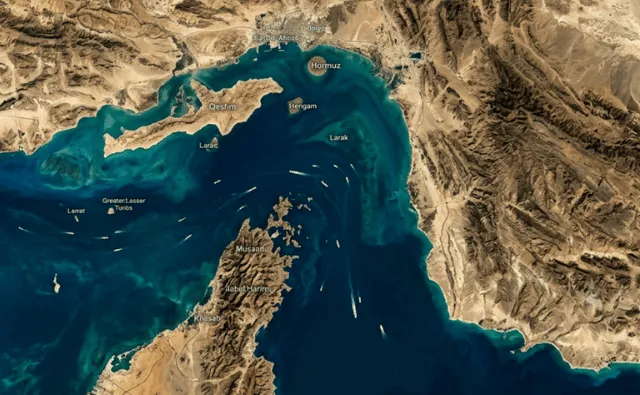
The 2026 closure of the Strait of Hormuz has transformed logistics across the Gulf, but ALBARIQ Equipment’s experience shows that supply‑chain resilience is built years before a crisis, not improvised once it starts. Facing a six‑week period with zero containers arriving in the UAE and sixteen containers stranded simultaneously across Oman, India, Pakistan and Africa, the company absorbed freight costs that rose from AED 10,000–12,000 per 40‑foot container to AED 35,000–45,000 as a new “normal”, with worst‑case shipments exceeding AED 112,000. Instead of passing these costs directly to customers, ALBARIQ relied on three years of deliberate preparation: high inventory levels treated as insurance, an AI‑driven demand‑planning platform managing 26,350 planning items and around 15,000 active part numbers, and a regional footprint of seven stocking locations with zero debt on the balance sheet. Continuous air shipments, real‑time container tracking integrated with ERP, and dual‑coast logistics via UAE and Saudi ports allowed the company to maintain service continuity for hospitals, airports, hotels and facilities even as global trade routes were reshaped. The article argues that inventory, technology, financial discipline and logistics flexibility together turn uncertainty into a manageable operational challenge.
1. Core Technology / Process
2. Key Ingredients / Specifications
| Element | Source / Type | Applications | Status in Article |
|---|---|---|---|
| AI-driven demand-planning platform | Inventory planning and purchasing system | Analyses demand, automates purchasing, adjusts safety stock and service targets | Implemented since April 2024 |
| 26,350 planning items | Inventory planning records | Used for demand forecasts and purchasing recommendations | Managed by AI platform |
| ≈15,000 active part numbers | SKUs across equipment and spare parts | Support service continuity for cleaning and floor-preparation machinery | Active stock base |
| Spare parts (25–30% of inventory value) | Critical components for machines | Ensure rapid repair for scrubbers, sweepers and industrial equipment | Higher than typical industry levels |
| Seven stocking locations | Dubai, Abu Dhabi, Riyadh, Jeddah, Dammam, Tabuk (NEOM), Doha | Regional inventory pooling and transfer between sites | All SKUs visible in Microsoft Dynamics 365 Business Central |
| Dual-coast port access | UAE ports (Khor Fakkan, Fujairah), Jeddah Port | Inbound logistics from Asia via UAE, Europe via Jeddah | Provides routing options during congestion |
| Real-time container tracking | Platform integrated with ERP | Monitors rerouting, offshore waiting, mid-journey offloading | Supports realistic delivery commitments |
| Microsoft Dynamics 365 Business Central | ERP / operational backbone | Group-wide visibility of SKUs and locations | Core system for logistics and inventory |
| Salesforce Field Service | Field service management platform | Supports after-sales operations in UAE, Saudi Arabia and Qatar | Part of modern service infrastructure |
| Zero-debt financial structure | Conservative balance sheet | Allows absorption of extraordinary freight and inventory costs | Key enabler of crisis resilience |
3. Performance Data
4. Market / Sustainability
AI Editor’s Context
This article situates ALBARIQ’s experience within a logistics landscape where geopolitical disruption has turned the Strait of Hormuz into a persistent stress test for Gulf‑based importers. Rather than focusing on reactive measures, the narrative emphasises how pre‑crisis decisions—elevated inventory, AI‑driven planning, diversified port access and a debt‑free balance sheet—collectively underpin operational resilience when freight costs spike and containers stall. The case illustrates a shift away from purely lean, working‑capital‑optimised models towards a more insurance‑like view of stock and infrastructure, especially in sectors where equipment downtime is unacceptable. It also highlights the role of visibility and transparency, with real‑time tracking and realistic delivery commitments helping maintain trust even when timelines extend. In that sense, ALBARIQ’s approach is presented as a blueprint for businesses treating volatility as the baseline rather than an exception.
Companies / Organisations: ALBARIQ Equipment; Clean Middle East; Microsoft; Salesforce.
Products / Technologies: AI‑driven demand‑planning platform; Microsoft Dynamics 365 Business Central; Salesforce Field Service; QR‑coded equipment; real‑time container tracking system.
Materials / Inventory Elements: Planning items (26,350); active part numbers (~15,000); spare parts (25–30% of inventory value); professional cleaning machinery; floor‑preparation equipment.
Applications: Supply‑chain resilience; inventory planning; logistics management; facilities management support; hospitality operations; healthcare and airport cleaning services; regional stocking and transfers.
Keywords: Strait of Hormuz disruption, AI‑driven inventory planning, ALBARIQ Equipment, freight cost surge, spare parts inventory, Microsoft Dynamics 365 Business Central, Salesforce Field Service, regional stocking locations, zero‑debt strategy, logistics resilience
This content is an independent analysis and summary of public industry news for research purposes. All trademarks and brand names belong to their respective owners. We are not affiliated with the original publisher.
Copyright of this article resides with Clean Middle East. The copyright and all other rights in the original work reproduced here remain with the original author and/or publisher. This material is republished strictly to facilitate professional information exchange and advance discussion of industry innovation, without any commercial exploitation or intent to infringe. If you found this summary useful, please consider subscribing to the original source at https://www.cleanmiddleeast.ae.