



Feature Article, Company News, PR
The Silent Blight: Pine Forests, Rosin, and a Nation’s Quiet Struggle
Feature Article, Company News, PR
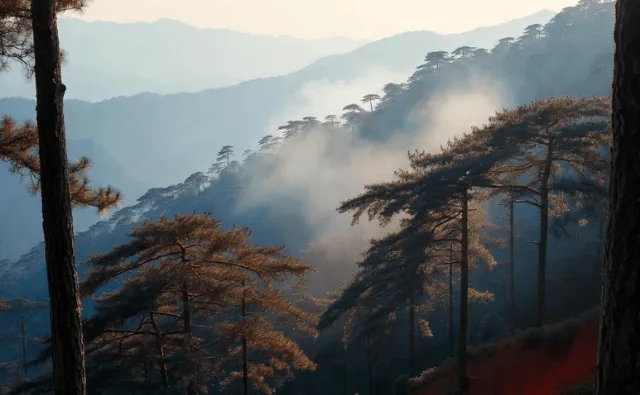
In the undulating hills of southern China, pine forests once flowed like a sea of green, breathing with the rhythms of dawn and dusk. Masson pines stood tall upon red earth, slash pines rooted themselves along gentle slopes, and latteri pines kept watch over the sea breezes of the Leizhou Peninsula. These trees were more than mere vegetation; they were the sinews of livelihood, the quiet origin of rosin and turpentine that journeyed from mountain groves to distant markets.
Yet in the early 1980s, an almost invisible invader slipped into this tranquillity: Bursaphelenchus xylophilus, the pine wood nematode—less than a millimetre in length, yet capable of turning entire forests crimson within weeks, as though scorched by an unseen fire. Unable to travel far on its own, it rides the wings of the pine sawyer beetle (Monochamus alternatus), multiplying silently within resin canals, choking the flow of water and life. So swift is its lethality, so stealthy its spread, and so difficult its control that foresters have come to call it “the cancer of pine trees”—others, “a forest fire without smoke.”
The scars of this blight run deeper than the bark of trees; they cut into the very arteries of an industry built upon pine oleoresin. Rosin, that clear and fragrant exudation secreted by pines in response to injury, contains resin acids and monoterpenes—the primal matter from which rosin, turpentine, and hundreds of fine chemical derivatives (adhesives, printing inks, fragrance intermediates) are born. Once infected, a pine’s vital currents falter, and its capacity to secrete oleoresin wanes. Studies show that [1] in the early stages of infection, daily rosin yield may plummet by more than half; as the disease deepens, secretion ceases almost entirely. Even when a trace is collected, its quality is compromised[2]: abietic acid diminishes, oxidation products accumulate, colour darkens, and thermal stability declines—rendering it unfit for the stringent international standards required of WW- or X-grade rosin. Thus, a pine stand stricken by wilt loses not only its ecological form but also its economic soul.
Recall the fiercest years of the epidemic, around the mid-to-late 2010s: in the mist-shrouded peaks of Wuyi Mountain in Fujian, the valleys of Shaoguan in Guangdong, and the karst landscapes of Guilin in Guangxi, vast swathes of Masson pine turned rust-red, their needles brittle, their branches hollow. In some counties, over one hundred thousand pines perished each year. As the world’s largest producer of rosin—supplying roughly 70% of global demand[3]—China relies heavily on Guangxi, whose output alone accounts for more than 60% of the national total, drawn chiefly from Masson pine. At the height of the crisis, traditional tapping zones were forced to suspend operations; rosin prices soared[4], yet quality deteriorated, jeopardising export contracts. More troubling still, pine wilt disease is listed under international phytosanitary regulations. Once a region is designated an infested zone, its pine wood and rosin products face heightened scrutiny, delayed customs clearance, or even outright bans abroad. The crisis in the hills thus became a crisis in trade.
Fortunately, despair did not prevail. Control strategies evolved from crude eradication toward an integrated framework: comprehensive management, source containment, and genetic resilience[5]. Physically, strict protocols govern the disposal of infested wood: stumps are cut no higher than five centimetres; all branches exceeding one centimetre in diameter are gathered and destroyed on-site—burned or chipped—to prevent any leakage of infected material[6]. Beetle traps and pheromone disruptors are deployed to suppress populations of the vector insect. Chemically, high-value trees—ancient specimens, scenic groves, germplasm reserves—are protected through trunk injections of emamectin benzoate or abamectin, administered like silent vaccines. But the most enduring hope lies in the seed itself. Forestry research institutes in Guangxi, Guangdong, and Fujian have joined forces in a long-term breeding programme for wilt-resistant Masson pine. After years of selection, fifty-six highly resistant families have been identified, and through molecular techniques, new germplasm with RNA interference-based resistance has been developed[7]. Field trials show these resistant lines achieve survival rates above 85% after three years in infested zones—far surpassing the mere 30% of ordinary stock.
In the past three years, signs of recovery have emerged. According to the National Forestry and Grassland Administration’s 2025 report[8], the number of county-level infested zones in Guangdong and Fujian has declined for three consecutive years, while Guangxi has seen a nearly 70% reduction in dead pines compared to peak levels. More significantly, restoration now looks beyond mere eradication toward renewal. In Wuzhou and Yulin of Guangxi, high-resistance Masson pines are being planted in non-infested areas, accompanied by scientifically guided tapping regimes, gradually restoring both yield and quality. In Sanming and Nanping of Fujian, mixed plantings of Masson pine with broadleaved species such as Schima superba and Mytilaria laosensis are being trialled—not only to enhance ecosystem resilience but also to secure a sustainable future for rosin production.
For global traders of rosin and turpentine, this protracted struggle offers a profound lesson: the stability of supply depends not merely on climate or market price, but on the health of the forest and the wisdom of its stewardship. Today’s international buyers increasingly demand “green supply chains”—inquiring not only about cost, but about origin: Is the rosin sourced from a pest-free zone? Harvested from resistant stock? Collected under low-carbon practices? When backed by ecological certification and sustainable management, rosin transcends commodity status and becomes a token of trust.
The pine wood nematode may never be fully eradicated. Yet as long as there are those who tend the hills with care, the fragrance of pine will not fade. It rises from the resin, distils in distant factories, and ultimately flows into the adhesive strength of glue, the sheen of ink, the whisper of natural scent in fine perfumery—a green lifeline spanning mountains and oceans, sustained by quiet diligence, and enduring still.
在华南的丘陵与山岭之间,松林曾如一片流动的绿意,随四季晨昏悄然呼吸。马尾松挺拔于红壤之上,湿地松扎根于缓坡之间,南亚松则守望着雷州半岛的海风——它们不仅是大地上的植被,更是无数人赖以生存的生计之源,是松香与松节油从山野流向世界的起点。然而,自上世纪80年代初,一种微不可察的入侵者悄然潜入这片宁静:松材线虫(Bursaphelenchus xylophilus),体长不足一毫米,却足以令整片松林在数周之内由青转赤,如被无形之火灼尽生机。它自身无法远行,却借松墨天牛之翼,在树脂道中悄然繁衍,阻断水分之流,使树木在无声中枯槁。因其致死迅疾、传播隐秘、防治艰难,林业人称之为“松树的癌症”,亦有人喻之为“无烟的森林火灾”。
这场病害的伤痕,不止刻在山林的肌理上,更深嵌于以松脂为命脉的产业脉络之中。松脂,本是松树在创伤之际分泌的天然防御之液,清亮而芬芳,内含树脂酸与单萜类化合物,乃松香、松节油及其下游数百种精细化学品——胶黏剂、油墨树脂、香料中间体——的原始母体。一旦松树染病,其生命之流迅速衰竭,泌脂之力亦随之式微。研究显示,感病初期,单株日均松脂产量可骤减逾半;至病势深入,几近枯竭。即便偶有采集,所得之脂亦色泽深沉、成分失衡:枞酸减少,氧化物增多,热稳定性下降,难以契合国际市场对WW级或X级松香的严苛标准。于是,一片疫区之内的松林,不仅失却了生态之形,亦黯淡了经济之光。
回望疫情最炽烈之时,约在2010年代中后期,福建武夷山的云雾间、广东韶关的山谷里、广西桂林的峰林下,皆可见大片马尾松如被霜打,针叶焦红,枝干空悬。彼时,某些县市年病死松树逾十万株。作为全球松香供应的重镇,中国年产松香约占世界七成,而其中六成以上源自广西——这片红土之上,马尾松林曾是无数林农的生计所系。疫情高峰之际,多个传统采脂区被迫停采,松脂价格一度飙升,然原料品质却持续滑落,出口订单屡屡受阻。更令人忧心的是,松材线虫病已被列入国际植物检疫名录,一旦某地划为疫区,其松木及松脂制品便可能遭遇跨境流通的重重壁垒,甚至禁令。山林之危,遂成贸易之困。
所幸,面对这场静默的侵蚀,人们并未止步于哀叹。防控之策,亦由昔日单一扑杀,渐次转向“综合防治、源头阻断、抗性提升”的立体格局。物理之法,首重疫木清理:伐桩低至五厘米以下,枝桠凡径逾一厘米者,悉数就地焚毁或粉碎,杜绝外流;同时布设诱捕器,释放信息素,以扰天牛交配,压其种群。化学之术,则用于守护珍木:古树名木、风景林、种质资源林,常以甲维盐或阿维菌素注入树干,如施以无声的疫苗。而最深远之策,藏于种子之中——广西、广东、福建三地科研机构携手,开展马尾松抗病育种攻关。经年累月,已筛选出五十六个高抗优良家系,并借助分子技术创制具RNA干扰机制的新种质。田间试验显示,这些抗病品系在疫区三年保存率逾八成五,远胜普通马尾松之三成。
近三年来,山林渐显复苏之象。据国家林业和草原局2025年通报,广东、福建县级疫区数量已连续三年下降,广西病死松树较峰值减少近七成。更可贵者,修复之道不再仅求“除病”,更重“重生”:广西梧州、玉林等地于非疫区推广高抗马尾松,辅以科学采割制度,松脂产量与品质稳步回升;福建三明、南平则试种马尾松与木荷、米老排等阔叶树混交,既增林分韧性,亦为未来留一方可持续采脂之林。
对全球松香与松节油贸易而言,这场漫长抗争带来一重深刻启示:原料之稳,非仅系于气候与价格,更根植于山林之健康与管理之智慧。今日国际市场日益关注“绿色供应链”——采购方不仅问价,更问源:是否来自无疫之地?是否采自抗病之树?是否遵循低碳之法?若能以生态认证为凭,以可持续管理为证,松脂便不止是商品,更成为信任的载体。松材线虫或许难以根绝,但只要山林尚有守护之人,松树的芳香便不会消散。它从树脂中蒸馏而出,流入远方工厂的反应釜,最终化作胶黏剂中的粘合力、油墨中的光泽、香氛中的一缕自然之息——这是一条跨越山海的绿色血脉,正因无数人的默默耕耘,而得以绵延不息。